Featured...

Click on the image for more information... Click on the image for more information... Click on the image for more information... Click on the image for more information... Click on the image for more information... Click on the image for more information...
Showing posts with label magical realism. Show all posts

Tuesday, March 3, 2015

Colorless Tsukuru Tazaki and His Years of Pilgrimage by Haruki Murakami, Philip Gabriel (Translator)


Blurb (from the jacket):


Tsukuru Tazaki had four best friends at school. By chance all of their names contained a colour. The two boys were called Akamatsu, meaning ‘red pine', and Oumi, ‘blue sea', while the girls' names were Shirane, ‘white root', and Kurono, ‘black field'. Tazaki was the only last name with no colour in it.

One day Tsukuru Tazaki’s friends announced that they didn’t want to see him, or talk to him, ever again.

Since that day Tsukuru has been floating through life, unable to form intimate connections with anyone. But then he meets Sara, who tells him that the time has come to find out what happened all those years ago.

Friday, October 3, 2014

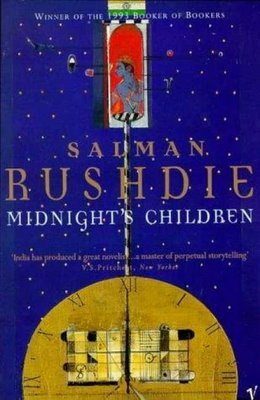
Midnight's Children by Salman Rushdie


Blurb (from the jacket):


Saleem Sinai is born at the stroke of midnight on August 15, 1947, the very moment of India’s independence. Greeted by fireworks displays, cheering crowds, and Prime Minister Nehru himself, Saleem grows up to learn the ominous consequences of this coincidence. His every act is mirrored and magnified in events that sway the course of national affairs; his health and well-being are inextricably bound to those of his nation; his life is inseparable, at times indistinguishable, from the history of his country. Perhaps most remarkable are the telepathic powers linking him with India’s 1,000 other “midnight’s children,” all born in that initial hour and endowed with magical gifts. 

This novel is at once a fascinating family saga and an astonishing evocation of a vast land and its people–a brilliant incarnation of the universal human comedy. Twenty-five years after its publication, Midnight’ s Children stands apart as both an epochal work of fiction and a brilliant performance by one of the great literary voices of our time

Saturday, August 16, 2014

Sputnik Sweetheart by Haruki Murakami, Philip Gabriel (Translator)


Blurb (from the jacket):


Sumire is in love with a woman seventeen years her senior. But whereas Miu is glamorous and successful, Sumire is an aspiring writer who dresses in an oversized second-hand coat and heavy boots like a character in a Kerouac novel. 

Sumire spends hours on the phone talking to her best friend K about the big questions in life: what is sexual desire, and should she ever tell Miu how she feels for her? Meanwhile K wonders whether he should confess his own unrequited love for Sumire. 

Then, a desperate Miu calls from a small Greek island: Sumire has mysteriously vanished...


Tuesday, May 27, 2014

If on a Winter's Night a Traveller by Italo Calvino


Blurb (from the jacket):


You go into a bookshop and buy If on a Winter's Night a Traveller by Italo Calvino. You like it. But alas there is a printer's error in your copy. You take it back to the shop and get a replacement. But the replacement seems to be a totally different story. You try to track down the original book you were reading but end up with a different narrative again. This remarkable novel leads you through many different books including a detective adventure, a romance, a satire, an erotic story, a diary and a quest. But the real hero is you, the reader.


Monday, April 21, 2014

Legends of Halahala by Appupen


Foreword:


If you are regular visitor of this blog and read my reviews of other Graphic Novels, you must well aware my obsession about them. Especially, Indian Graphic Novels.

That leaves me with little items on the menu. There are very few illustrators and fewer successful Indian Graphic Novels out there. I mention successful because, if it's not a success, it would either cost you a fortune to buy the novel or you have to go to the end of the world to find it.

I particularly hate Indian readers so much. Their negligence for Graphic Novels is one reason. Of course, they read Comics, but Graphic fictions and Comics share very little of similarities, when it comes to deeper sense. But I shalln't blame them either. The cost of the Graphic Novels are so high, I don't think Indian readers are much to be blamed.

So here I am, trying to promote Indian Graphic Novels and testing my own limits of sanity!!!

Tuesday, April 15, 2014

The Hotel at the End of the World by Parismita Singh


Blurb (from the jacket):


In the hotel at the end of the world it’s business as usual, as Pema dishes up rice and pork curry to travellers who stop by for a drink and refuge from the rains. Everyone there has a story to tell, and at times they end up revealing more than they want to.

On their journey to China, Kona and Kuja, bound together by fate, stumble upon the trail of the Floating Island, promised land of plenty. Pema’s story is about lost love, while her husband speaks of homesick Japanese soldiers in Manipur and the Naga hills during World War II. The Prophet takes us back to the quest for the Floating Island, leading us to the little girl’s story as she sets out to fetch water and chances upon something quite unexpected…


Drawing from various oral storytelling and folklore traditions, and with influences ranging from Commando war comics to World War II history and Buddhist art, Parismita Singh creates a world that's magical yet very real. Exquisite in terms of both narrative and artwork, The Hotel at the End of the World marks a new height in graphic fiction in India.

Sunday, February 23, 2014

Kafka on the Shore by Haruki Murakami


Foreword:


Another off the tbr list.

Another author and book recommended by Srinivas, the other author of the book.

One of its kind I've read yet. A new scope of genre in books, I've never ventured into.

In short, everything about the book is magnificent. Its black and red cover. The name of the author - Haruki Murakami. Especially, I like his name. The genre - Magical Realism.

After reading this book, I think every reader must try and read a book of this genre at least once. There won't be any person who wouldn't like this sort of books. If not for its story, its narration, or maybe the magic thing about it might did the trick.

Overall, it was fresh and a one of its kind read...


Tuesday, August 13, 2013

Shades of Shadows by Pushpam Singh


Review:


I have registered on the GoodReads giveaway of this book. Later, when the winners of the giveaway were declared, Pushpam Singh, the author, have contacted me to review his book. Well, the cover design was too tempting to reject. So I voluntarily accepted to review the book.

It was just another love story until I started reading the book. Even the description/plot of the book hints the same. The tagline - A poetic journey of Kavi and Kavya - was hinting nothing more, too. Only if I had given more thought to the tagline, I would have discovered that the book is not just any love story.

However, at the end, I was more than satisfied. It was fresh...


Plot (from the jacket):
"Every soul has a shadow. Every shadow has a shade. Every shade has a spirit."

It is the beginning of life on earth. Life sprouts in the navel of Kausar, a land blessed with beautiful contours and landscapes.

As life opens its eyes in the backdrop of silence and darkness, beauty wrapped in mysterious silk sings for it.

On such a changing canvas of Nature, Kavi meets Kavya.

Love finds a new flavour in their romance and Kausar finds a new array in their presence.

But with change in the mood of time,the melody of shades undergo a change.

Will these melodies sustain the test of time..?
Join Kavi and Kavya on this poetic and intriguing journey to find out more...

About the author (from between the covers):
Pushpam Singh is an engineer by profession but a poet at heart. His love for poetry found its right blend in this book. He completed his Mechanical Engineering from NIT, Durgapur, in 2007.

He lives in Bangalore with his family.

He is an adventurer at heart and loves travelling to new places and meeting new people. He also has a passion for photography. His biggest dream is to photograph the whole of India.

My take on the book:
Cover design:
It is the first book with a good cover design, I've have come across after the establishment of Frog Books. Actually the cover picture holds a great association to the landscape of the fictitious place, Kausar, which is most beautifully and poetically described in the story. I would rate the cover design of the book a 4 out of 5!

I discovered another pattern among the books from Frog Books. All three sides of the cover of the book feature three different colours.


Publishers:
Frogs Books. They are an imprint of Leadstart Corp. Needless to say, I have been receiving quite a few books from these publications lately. (Others being - A Maverick Heart: Between Love and Life by Ravindra Shukla and Seven Days Without You by Anmol Rana) Although, the former books didn't have a good impression with me, this book had restored some faith from these Publishers. However, I hope there are more good books on their way to limelight from these publishers...

Title and the tagline:
The aptness of the title to the story can't be determined. This is no love story or a story oriented novel. Of course, the book has a story, but it has little importance considering the entire context of the book. Poems surpass every detail of the story.

Well, when description/plot or the title of the book did little to hint a poem outburst enclosed in the confines of the book, the tagline literally shouts, 'the poetic journey of Kavi and Kavya'. The tagline couldn't be apter.

Story and other aspects:
The very first impression before I started reading this book is that this is another love story and was mentally prepared to face it. Well, there are so many love stories floating around and love story with 'I love you' in every page and scenes like losing in each other's gaze was for me way too much. I had enough of my doze, yet. So I had to mentally prepare for it and, on the other hand, was on the look out for the interesting aspects of the book.

I started reading the book.

For the first 20 pages or so, I don't know what was happening. I read and re-read paragraphs after paragraph. There is someone who is narrating the story, but I knew not who. There were events taking place, which by the description are impossible to interpret. The only thing I was sure of was that the protagonist was not into the scene yet. Though, there is not much meaning that I could yield out of the story, there is some strange attraction about the narration. Of the entire 20 pages of prose, I only understood bits and pieces. Those bits and pieces only held so much attractive force.

There were words like 'Red glory celebration' and 'white glory celebration'. Maybe, it was on the third or the fourth encounter of that word when the actual meaning of those words dawned on me. They literally meant, Morning and Night in the narrator's point of view. Actually, before the introduction of Kavi and Kavya, someone else was narrating the story, whom I did care to find out. Well, I am not sure of it. It could be a tree or a plant. There was no means to be sure because there was no literal mention of the narrator.

All this confusion only because I was very slow to realize the poetic language in which the prose was narrated. So I warn you now, and also later in the review, readers, this book is best understood and enjoyed by people with a poetic mind. If you don't have one, well, tune your mind up.

I had little encounter with poems or poetry before now. Of course, I studied few poems in my alma mater days, but a book of poems was new to me. When I ruffled through the pages of this book, before started reading it, I noticed a lot poems evenly arranged throughout the book. I was in for experimenting. I wanted my vision to stretch to poems and poetry, too. Then, I was not even sure whether I would like it. Despite the fact that a poetry will be able to judge this book better due to his continuous exposure to the like, I will try my best to judge it appropriately.

The narration of Pushpam is so awesome that the reader literally transported a new world - Kausar. The first 20 to 30 pages of the book get along with the description of the place named, Kausar and the chores that take place every dawn and dusk over there and the injection of the protagonist into the story. Then on, the story carries on with the third-person narration of Kavi and Kavya journey. The entire book is divided into four chapter in total named: White, Red, Grey and Red, chronologically. The story starts with the poetic prose. Every prose is followed by a set poems. And every set of poems are followed by a section of prose. This goes on till the end of the book.

To compare, the book felt more like Paulo Coelho's Manuscript Found in Accra. The prose in between the sets of poems were used to mediate and create a link between two different sets of poems.

The lines of a good poem doesn't need to rhyme. That is broadly proved by Pushpam Singh.

During the read, I checked out the author's profile on GoodReads and was astounded to see the list of books he read. Most of them were top class books. I know now how Pushpam Singh had got a great command with his words. Lately, I find authors who read very little. There is one, I won't mention his/her name, who seldom reads book, but came up with a novel of his own. Of course, his novel was a all-time flop. I think, for an author, it is important to read as much as it is important for him to write.

Final verdict:
I definitely warn those who take up in expectation of a regular romance/love story. There is more than that to it. Non-poetic lovers are least suggested to read this book.

Recommendations:
To all those poems and poetic narrative lovers. This is a poetic-delight from an Indian poet, Pushpam Singh.


Thursday, November 29, 2012

Life Of Pi by Yann Martel

Life Of Pi by Yann Martel  
Rating: 5 out of 5

ISBN (edition I've read): 9781841954257

The plot is like this:

After a tragic sinking of a ship, Pi, the lead character of the book, finds himself lifeboat-bound with no other human being, save for four animals - an organ-utan, zebra with a broken leg, a hyena and a 350-pound Bengal Tiger, named Richard Parker. How did Pi stay alive, all the way, till he met civilization? You will have to read this one.

That's what the plot claims but the novel is more than it. Read the name of the book - Life of Pi. Nothing like Surviving at Pacific or boat-bound with a Bengal Tiger. The point I am trying to make is the story tells more than the pacific adventure.

The picture and the ISBN features above are of my 2003 edition of Life of Pi. I feel lucky for getting my hands on such an old edition of this prestigious book!

The starts with author, Yann, reaching India, in search of a story for his next novel, which starts in India and ends in Portuguese. Like fate would have it, he meets Pi a.k.a. Piscine Patel.

Then, the story fluctuates between the story narrated by Piscine and author's own experience with the narrator.

If you want to get to the thrilling part of the book from page 30, you would be disappointed about this. As I have already told you, this book has more than the plot claims.

Piscine is a Catholis Muslim - Hindu. If there is anything like that. He is a Christian. He is a Muslim. He is an Hindu. He is a Jew. He doesn't have a religion. All he believes in is God and every form of His.

The first part of the story deals with his story how he was born an Hindu; how he started to be a Christian; how he started to worship Allah. Then, about the zoo, his father ran. Then, about Anandi, Pi's love.

One day, Pi's father decides to sell off all the animals of his zoo and thinks of settling in Canada. Of course, Pi wouldn't be happy with his decision. After all, he had his love in India. But then, he was helpless. His father, the head of the family, had taken the decision and it is unalterable.

Finally, the day of the great journey in a Chinese cargo ship, Tsimtsum, loaded with various animals of the zoo, starts.

Few days, into the voyage due to a storm the ship sinks and Pi finds himself, sharing a solitaire lifeboat with a orang-utan, hyena, zebra with a broken and a Bengal Tiger.

The best part of the whole book starts here. The rest of the story describes how he survived from being eaten by the Tiger or hyena, for that matter. How he survived for so many days at see, with not a piece of land in sight. How he befriends the tiger. Yeah! He befriends - trains, actually - the tiger!

What I think about the story:

The book is invincible.If you have come across this book but overlooked it. Believe me, mate, it is the worst day you are going through.

Truly worth the Man Booker Prize. This is my first of my Man Booker reads and it just swept me off my feet.

Personally, I read books on adventure and travels. So this book was like a ultimate survival story for me.

A must read for every human being.

After completing reading this book, everyone has one question in their mind. Is this fiction, as it is claimed? Or, a non-fiction, which it seems?

Well, I don't think anyone could clear that doubt. Not even the author, I could say. The story is so convincing that it is even hard to believe what author claims, if it is against our conception.

At the end of the story, the same story is repeated replacing the animals with humans. That version of the story seems reasonable, too. That's when the reader is thrown into the dilemma. The present question in mind is, "Which version of the story is real? The animal one or the humans one?"

Let me tell you something, the truth doesn't matter. Your believe is all that matters...

Indeed, it is a story that will make you believe in God(you will get it, after reading the author's note)...

You might also like: