Featured...

Click on the image for more information... Click on the image for more information... Click on the image for more information... Click on the image for more information... Click on the image for more information... Click on the image for more information...
Showing posts with label classic. Show all posts

Friday, December 9, 2016

Matilda by Roald Dahl


Blurb (from GoodReads):


Matilda is a little girl who is far too good to be true. At age five-and-a-half she's knocking off double-digit multiplication problems and blitz-reading Dickens. Even more remarkably, her classmates love her even though she's a super-nerd and the teacher's pet. But everything is not perfect in Matilda's world. For starters she has two of the most idiotic, self-centered parents who ever lived. Then there's the large, busty nightmare of a school principal, Mrs. ("The") Trunchbull, a former hammer-throwing champion who flings children at will and is approximately as sympathetic as a bulldozer. Fortunately for Matilda, she has the inner resources to deal with such annoyances: astonishing intelligence, saintly patience, and an innate predilection for revenge.

She warms up with some practical jokes aimed at her hapless parents, but the true test comes when she rallies in defense of her teacher, the sweet Miss Honey, against the diabolical Trunchbull. There is never any doubt that Matilda will carry the day. Even so, this wonderful story is far from predictable. Roald Dahl, while keeping the plot moving imaginatively, also has an unerring ear for emotional truth. The reader cares about Matilda because in addition to all her other gifts, she has real feelings.


Friday, June 19, 2015

Carrie by Stephen King


Blurb (from elsewhere):


A modern classic, Carrie introduced a distinctive new voice in American fiction -- Stephen King. The story of misunderstood high school girl Carrie White, her extraordinary telekinetic powers, and her violent rampage of revenge, remains one of the most barrier-breaking and shocking novels of all time.

Make a date with terror and live the nightmare that is...Carrie.

Thursday, May 28, 2015

The Guide by R. K. Narayan


Blurb (from the jacket): 


Railway Raju is a disarmingly corrupt tourist guide, who lives by his wits and falls in love with a beautiful dancer. More by chance than skill, he seduces her away from her husband, a lonely writer who is obsesses with local rock-carvings, and transforms her into a celebrity courted by wealthy and influential dignitaries wherever she performs. Raju makes and loses a fortune, finds himself in jail, and - through a series of hilarious, ironic circumstances - become one of India's great holy men.

The history of his success and unexpected fame has all the excitement of a suspense story, told with Narayan's customary tolerance and delightful humour. At the same time it raises many profound and disturbing questions.

THE GUIDE floats as gently as a lily pad on the surface of Indian life and yet suggests the depths beneath. It manages to describe a saint who is neither born nor made but simple happens, almost like a weather.

Wednesday, January 28, 2015

Fight Club by Chuck Palahniuk


Blurb (from the jacket):


Every weekend, in basements and parking lots across the country, young men with good white-collar jobs and absent fathers take off their shoes and shirts and fight each other barehanded for as long as they have to. Then they go back to those jobs with blackened eyes and loosened teeth and the sense that they can handle anything. Fight Club is the invention of Tyler Durden, projectionist, waiter and dark, anarchic genius. And it's only the beginning of his plans for revenge on a world where cancer support groups have the corner on human warmth.

Monday, November 10, 2014

The Thirty-Nine Steps by John Buchan (Richard Hannay #1)


Blurb (from the jacket):


'My guest was lying sprawled on his back. There was a knife through his heart which skewered him to the floor.'

From that moment Richard Hannay's own life is under threat. A few days before, the dead man had told him of a political assassination that was shortly to take place in London and which would have terrible repercussions around the world. In mortal danger he sought refuge in Hannay's flat. Now he had been murdered and Hannay had to move quickly if he was not to suffer the same fate. 

Pursued by both police and killers he heads for Scotland. There, among the Scottish moors, a deadly game of cat and mouse ensues, and Hannay needs all his resourcefulness and courage to stay one step ahead. His only hope is to persuade someone in the British Government of the impending danger. But will he be able to get to them in time and save the country from certain ruin?

The Thirty-Nine Steps is the most famous of the five novels featuring Richard hannay and established John Buchan as one of Britain's finest writers of suspense stories.

Wednesday, November 5, 2014

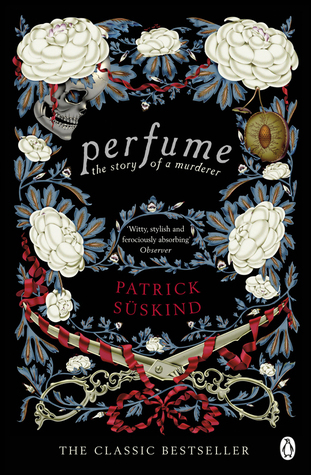
Perfume by Patrick Süskind


Blurb (from the GoodReads):


In the slums of eighteenth-century France, the infant Jean-Baptiste Grenouille is born with one sublime gift: an absolute sense of smell. As a boy, he lives to decipher the odors of Paris, and apprentices himself to a prominent perfumer who teaches him the ancient art of mixing precious oils and herbs.

But Grenouille's genius is such that he is not satisfied to stop there, and he becomes obsessed with capturing the smells of objects such as brass doorknobs and frest-cut wood. Then one day he catches a hint of a scent that will drive him on an ever-more-terrifying quest to create the "ultimate perfume"—the scent of a beautiful young virgin.

Told with dazzling narrative brillance, Perfume is a hauntingly powerful tale of murder and sensual depravity.


Thursday, September 11, 2014

Of Mice and Men by John Steinbeck


Blurb (from the jacket):


The compelling story of two outsiders striving to find their place in an unforgiving world.

Drifters in search of work, George and his simple minded friend Lennie have nothing in the world except each other and a dream--a dream that one day they will have some land of their own. Eventually they find work on a ranch in California's Salinas Valley, but their hopes are doomed as Lennie, struggling against extreme cruelty, misunderstanding and feelings of jealousy becomes a victim of his own strength.

Tackling universal themes and giving a voice to America's lonely and dispossessed, Of Mice and Men has proved to be one of Steinbeck's most popular works, achieving success as a novel, a Broadway play and three acclaimed films.


Sunday, August 24, 2014

V for Vendetta by Alan Moore, David Lloyd (Illustrator)


Blurb (from GoodReads):


"Good evening, London." It's nine o'clock and this is The Voice of Fate... It is the Fifth of the Eleventh, Nineteen-Ninety-Seven...

"The people of London are advised that the Brixton and Streatham areas are quarantine zones as of today. It is suggested that these areas be avoided for reasons of health and safety...

Police raided seventeen homes in the Birmingham area early this morning, uncovering what is believed to be a major terrorist ring. Twenty people, either of them women, are currently in detention awaiting trial...

The weather will be fine until 12:07 A.M. when a shower will commence, lasting until 1:30 A.M... 

Have a pleasant evening."

A frightening and powerful tale of the loss of freedom and identity in a chillingly believable totalitarian world, V for Vendetta stands as one of the highest achievements of the comics medium and a defining work for creators Alan Moore and David Lloyd.

Set in an imagined future England that has given itself over to fascism, this groundbreaking story captures both the suffocating nature of life in an authoritarian police state and the redemptive power of the human spirit which rebels against it. Crafted with sterling clarity and intelligence, V for Vendetta brings an unequaled depth of characterization and verisimilitude to its unflinching account of oppression and resistance.

"Remember, remember the fifth of November..."

Saturday, April 19, 2014

The Great Gatsby by F. Scott Fitzgerald


Foreword:


The Great Gatsby. What must I say? What can I say, perhaps? Name a book list featuring top books and you will find this book in it.

Even the author, is considered one of the most celebrated authors of Classic Literature.

Though I had in my possession the '94 edition of the classic, I stalled it for a long time. The blurb and everything else about the book just gave me the impression that it was just another overrated classic. You know, those classic which are overrated only for the fact that they had been written way back in the history. Or portrayed some extinct culture followed by people of that time - like, in the case of this book, the Jazz Age. 

Until, the movie starring DiCaprio, titled the same, found its way to the theatre. To watch the movie, I had to read the book first. That was an age-old resolve I had taken during the start of my reading days. So, basically, it is DiCaprio who had made me read this book. 

And, in that case, I would love to thank Leonardo immensely for it! Or else, I would have missed so great a book.

Thursday, March 6, 2014

Nausea by Jean-Paul Sartre


Foreword:


Another book of Srinivas's - the other blogger of the blog - taste.

Though I am the one who reads varied range of books and genre, Srinivas is the one who reads more serious stuff. Our tastes rarely overlap, so that is one reason we don't many books in common that we have read. However, a spade is a spade, so some books unmistakably win both of us - for instance, take Fahrenheit 451.

I didn't start reading this book on his recommendation. He rated this book five-stars and I was not surprised. If the book is famous I could predict he would like it. But on GoodReads, this book seems to be the most read book under Philosophy.

Firstly, let me make it clear that I am no philosophical person. Yeah, I like some well grammared quotes by some philosophers, but that was that. My territory in philosophy is very limited and constrained.

And with this book, I think it would take ages for me to regain courage to try and explore the genre again...

Friday, January 31, 2014

Untouchable by Mulk Raj Anand


Foreword:


In my spree of reading more Indian books than international authors, I have read a quite a wide array of books. Most of them were love stories. IITians. IIMs. Contemporary college romances. Some chic-lits. Then came intense stories and authors, like Amitav Ghosh, R. K. Narayan. With Narayan came Mulk Raj Anand.

A line in the author's introduction in this book goes like this,

"... he together with R. K. Narayan, Ahmed Ali and Raja Rao, was one of the first India-based writers in English to gain an international readership..."

I have read R. K. Narayan. I see him as my idol. I admire his work. I decided to try Mulk Raj Anand in the hope that he writes with the same intensity as Narayan.

Well, I am disappointed. They are no same authors. They way of fiction differ entirely from each other, save for one aspect. Only that they write about Indians. Even the societal class of which they describe in their story differ!

But it must be accepted that every author has his own way of writing and his own stories. No two author's work must be compared. Keeping that in mind, I move on to write the review to a book, whose type I have never encountered before. It was fresh. New to me. And refreshing.

Monday, January 6, 2014

Slaughterhouse Five by Kurt Vonnegut


Foreword:


In my crazy spree of reading all those post-apocalyptic, dystopian novels - like Fahrenheit 451 and Anthem - I ended up with this novel.

Well, this is not particularly a post-apocalyptic novel. In fact, it is not literally dystopian, save for in some sense. But I was anyway recommended this book due to my interest in the above books. I checked out the blurb, it had time-travel. Sci-fi is always on my favourites list, so I started to read this book.

It is another reason that I have received this book as a gift. You wouldn't know how happy I was. Especially because it is a Vintage Classic - a new enthusiasm I picked up lately.

Blurb (from the jacket):
Prisoner of war, optometrist, time-traveller - these are the life roles of Billy Pilgrim, hero of this miraculously moving, bitter and funny story of innocence faced with apocalypse. Slaughterhouse 5 is one of the world's great anti-war books. Centring on the infamous fire-bombing of Dresden in the Second World War, Billy Pilgrim's odyssey through time reflects the journey of our own fractured lives as we search for meaning in what we are afraid to know.

Friday, December 20, 2013

Anthem by Ayn Rand


Foreword:


This is one of those books which we haven't received for reviewing. Of course, we are just too small-time, to receive an Ayn Rand's book for reviewing. In fact, I don't see any need why her books would need ratings, reviews or publicity. People who are familiar with Ayn Rand's writing will read them anyway and others will read them, too, for the mere brilliance of her work!

Basically, this is my first exposure to Ayn Rand's work, her philosophy, objectivism, her followership. Never in my wildest dream did I think that Ayn Rand was such massive figure in the field of literature and philosophy. In fact, it was a shocker to know the various organizations named after her and built on the basic foundation of her philosophy - objectivism.

The very basic reason I picked up this book is by its slender thickness. It is seldom 105 pages, which includes 16 pages of 'Introduction'. Perhaps, I believe, this book is the thinnest book written by Ayn Rand. Well, I was being satiric, about her other humongous books - Fountainhead and Atlas Shrugged.

The other reason behind picking up this book is its Dystopian plot. Every since I read, Fahrenheit 451, I developed this strange tang to read more of Dystopian novels. In fact, there were many similarities that are clearly shared between these two novels, apart from their slenderness.

Thursday, November 21, 2013

Fahrenheit 451 by Ray Bradbury


Foreword:


I didn't expect I would read this book. At least, not this soon. With that never-ending stack of books, I wouldn't read this book for coming quarter of a year, by when hopefully, I would be done reviewing the entire stack of tbr and would be as free as a flying seagull. (God, how poetic have I become! Well, this book is to be blamed for that!)

Now that I finally read it, how do I feel? It is not the emotion that could be literally described in words, so I decided to write this review with help of various .gifs and I hope that this review marks the start of the .gif influenced reviews I aim to write.

Plot (as per the back-cover):
Guy Montag is a fireman. In his world, where television rules and literature is on the brink of extinction, firemen start fires rather than put them out. His job is to destroy the most illegal of commodities, the printed book, along with the houses in which they are hidden.

Montag never questions the destruction and ruin his actions produce, returning each day to his bland life and wife, Mildred, who spends all day with her television “family.” But then he meets an eccentric young neighbor, Clarisse, who introduces him to a past where people didn’t live in fear, and to a present where one sees the world through the ideas in books instead of the mindless chatter of television.

When Mildred attempts suicide, and Clarisse suddenly disappears, Montag begins to question everything he has ever known. He starts hiding books in his home, and when his pilfering is discovered, the fireman has to run for his life.

Tuesday, March 5, 2013

I Am Legend by Richard Matheson

I Am Legend by Richard Matheson

Rating: 4 out of 5

ISBN (edition I've read): 9780575081987

Read between: 24-02-2013 to 05-03-2013

Review:
Though the cover page of this edition and the title of the book resembles the Hollywood flick named the same, starring Will Smith, the story seldom similar.

Plot:
I Am Legend, though, was a trailblazing and later much imitated story that reinvented the vampire myth as SF. Without losing the horror, it presents vampirism as a disease whose secrets can be unlocked by scientific tools. The hero Robert Neville, perhaps the last uninfected man on Earth, finds himself in a paranoid nightmare. By night, the bloodthirsty undead of small-town America besiege his barricaded house: their repeated cry "Come out, Neville!" is a famous SF catchphrase. By day, when they hide in shadow and become comatose, Neville gets out his wooden stakes for an orgy of slaughter. He also discovers pseudoscientific explanations, some rather strained, for vampires' fear of light, vulnerability to stakes though not bullets, loathing of garlic, and so on. What gives the story its uneasy power is the gradual perspective shift which shows that by fighting monsters Neville is himself becoming monstrous--not a vampire but something to terrify vampires and haunt their dreams as a dreadful legend from the bad old days.

My take on the book:
This novel is altered out of recognition when filmed as The Omega Man(1971). If I am not wrong, it is very much likely to mistake this story to be the same as the story of the Hollywood flick, named I Am Legend, starring Will Smith (not to mention, my favourite actor).


Avoid the movie; read the book, says David Langford, referring the movie, The Omega Man.

The most striking attribute about the story is how the author draws a link between two distinct of genres - Horror and Science Fiction. Vampires are the subject of horror and fantasy, Richard Matheson had made a remarkable effort putting out the effort of putting forward scientific reasoning of Vampires and their fears - fear of gingers, crosses, etc.

The cover of the edition I read is a fairly misleading. First of all, the text at the bottom of the cover page - NOW A MAJOR FILM STARRING WILL SMITH - is a fake and the cover page, at the first place, is a wrong. The only connection between the movie, starring Will Smith, and the novel are the titles and both of them revolve around zombies (vampires) apocalypse. The book is a master piece. And so is the movie starring Will Smith.

The movie dealt with the surviving of the last man on the earth, searching and waiting for other survivors. But this novel's story is only about the survivor and his feelings of being the last man alive.

The feeling of the person are so well described that there were moments I cringed at the protagonist's loneliness.

Very well narrated. Easy language. Awesome plot line. Heart-touching narration. Amazing read.

Recommendations:
Every person who have watched and liked the movie, I Am Legend, starring Will Smith, should read this. Also the readers who have a lapping taste for horrors and sci-fi must give this book a try...

Tuesday, January 29, 2013

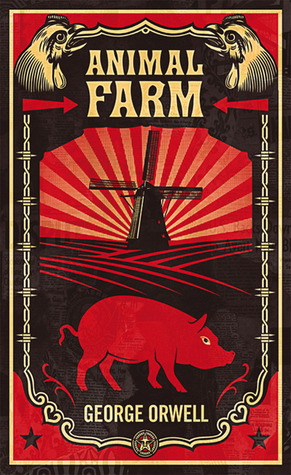
Animal Farm by George Orwell

Animal Farm by George Orwell

Rating: 3 out of 5

ISBN (edition I've read): 9780141036137

Read between: 27-01-2013 to 29-01-2013

Review:
Note: This book is best if the reader has the fundamental knowledge of the Russian Revolution and Stalin era.

Plot:
Tired of their servitude to man, a group of farm animals revolt and establish their own society, only to be betrayed into worse servitude by their leaders, the pigs, whose slogan becomes: “All animals are equal, but some animals are more equal than others.” Published in 1945, this powerful satire of the Russian Revolution under Stalin remains as vivid and relevant today as it was on its first publication.

My take on the book:
This book is part of the 'ALL-TIME 100 NOVELS'.

I always had a notion to read this book. The name, Animal Farm, was too much for me to resist. I have always been a animal-enthusiast. (Yeah, I pay more heed to the name of the book than the plot. In fact, I had very little idea about the plot of the book.)

The other reason was the thickness of the book. It is damn difficult to resist a well-known classic novel which is seldom 100-pages thick.

There was a fact in the 'A NOTE ON THE TEXT' section of the book. My mother tongue is Telugu and, I learnt from the note, that this one of those few classics which were translated to Telugu. It also states that many versions of this book has been freed of the original subtitle - 'A FAIRY STORY'. The statement goes like this: "Only in Telugu, of all the translations made in Orwell's lifetime, was A Fairy Story retained."

It was only after I came to know that the fundamental knowledge of the Russian Revolution was needed to understand the satire in the novel, I felt disheartened and thought that I should have paid a little attention during my history classes.

To speak of the language, it is the best. No hard words. No undecipherable sentences. Everything was straight-forward. Every was easy to understand. Awesome language, I would like to call it.

Actually, I enjoyed the story even when I know nothing of the Russian Revolution and Stalin era. Though the story was indicating satiric actions equivalents of the happening of a historic event, it was as good as a good fiction novel. Of course, pigs learning to read, talk and dictate over other animals seemed absurd, but it was pretty entertaining. Perhaps, I would have had a better experience of the book, if I had a minimum knowledge of the historic event.

Also there were more than one instance, when I was reading this book and I fell asleep...

Recommendations:
I recommend it to people who have the essential knowledge of the Russian Revolution and Stalin era. I don't know what you would feel during the read.
I also recommend it to those who are in search of a quick, entertaining read.

Friday, January 4, 2013

The Book Thief by Markus Zusak

The Book Thief by Markus Zusak

Rating: 5 out of 5!!!

ISBN (edition I've read): 9781862302914

Read between: 28-12-2012 to 04-01-2013

Review:

Heard a lot of praise about this book. Started reading it with a lot of expectations. And at the end, I was well satisfied. It is probably the last book I started reading last year and the first book I completed this year...

I am certain that you might've heard of the types of narrations - first person and third person. But this book is in a new type of narration. No person narration. The person - or rather, thing - who narrates the story is Death. Yeah, you read it right. It is Death. And the way the author conveyed is much intelligent. The tagline, "When Death tells a story, you really have to listen," can't be more apt...

Plot:
Death has never been busier, and will become busier still. Liesel Meminger's life is changed when, by her brother's graveside, she picks up an object, partially hidden in the snow. It is The Gravedigger's Handbook, left there by accident, and it is her first act of book thievery. So begins a love affair with books and words, as Liesel, with the help of her foster father, learns to read. Soon she is stealing books from Nazi book-burnings, the mayor's wife's library, wherever these books are to be found. But these are dangerous times. When Liesel's foster family hides a Jew in their basement, Liesel's world is both opened up, and closed down.

My take on the book:
I don't think anyone might pick up this book by reading the plot or the description of the book. They - the plot - don't give a minutest hint of what the book has got in store for the reader.
Maybe the 'Death narrating the story' part will attract few curious readers but others who merely depend on descriptions and plots will certainly overlook this book. It is only after watching the online ratings of this book that they realize what great a book they've missed.

After reading 50 or so pages, one would understand that the story doesn't follow a particular plot. No certain rhythm. It is evident that author started writing the story and the story made itself up.

When I sit down and think of writing a review about the book, I don't know what to write. In the case of all other books I've read, there was a certain rhythm in the flow of the story. Then I would high-light few things which I liked and disliked about the book. That is how I write a review. But that isn't helping me in the case of this book. All I could say is,

Go, read the book. You will in no way regret it.

There is no particular reason to hate this book. There isn't for liking this book, for that matter. The book is good. It just is. No reason at all. It is kind of a book which is slow, yet not boring. One couldn't rush through the pages. One couldn't risk missing a single word. It feels like each word of the story is thought for days and got printed.

Recommendations:
Don't expect me to point out a group of people. If you read books, you should read this one.

Sunday, December 9, 2012

Siddhartha by Hermann Hesse

Siddhartha by Hermann Hesse

Rating: 4 out of 5

ISBN(edition I've read): 9780141189574

Review:


About the author:
Hermann Hesse is a German poet, novelist and a painter. He also won Nobel Prize for literature in 1946. Siddhatha is his most acclaimed novel.

"If you hate a person, you hate something in him that is part of yourself. What isn't part of ourselves doesn't disturb us." Is from his novel, Demian. This quote is one reason I like him. It portrays his deep-style of thinking and quantity of knowledge, he possesses, on the human beings.

Plot:
In the shade of a banyan tree, a grizzled ferryman sits listening to the river. Some say he's a sage. He was once a wandering shramana &, briefly, like thousands of others, he followed Gotama the Buddha, enraptured by his sermons. But this man, Siddhartha, wasn't a follower of any but his own soul. Born the son of a Brahmin, Siddhartha was blessed in appearance, intelligence & charisma. In order to find meaning in life, he discarded his promising future for the life of a wandering ascetic. Still, true happiness evaded him. Then a life of pleasure & titillation merely eroded away his spiritual gains until he was just like all the other "child people" dragged around by his desires. Like Hesse's other creations of struggling young men, Siddhartha has a good dose of European angst & stubborn individualism. His final epiphany challenges both the Buddhist & Hindu ideals of enlightenment. Neither a practitioner nor a devotee, neither meditating nor reciting, Siddhartha comes to blend in with the world, resonating with the rhythms of nature, bending the reader's ear down to hear answers from the river.

My take on the book:
I came across this book in a bookstore, which sold old second-hand books. When I first looked at the name of the book and the picture on the cover, I was sure it was about spirituality and the story is of Goutama Buddha.

I read the description on the back of the book and from what I could make out, it was about Siddharatha. There is a terrible misconception in we, people, that Siddhartha is one of the various names of Buddha. Actually, it is not.

I asked many people, whom I came across, "Who is Siddhartha?" Except for few people who pointed towards the actors and other famous persons with that name, most of them said, it is Buddha. At first, even I mistook the name to Buddha and picked up the book thinking it must be his biography or something.

I was awed by the fact that the book is Buddha's biography and is so thin. There were only few pages more than 100. That was another reason I picked up the book.

There were parts of the story which were pretty lame. Not many - if any - kids in India - if anywhere - are so much into spirituality. Kids tend to play. They don't give up their family and friends, to go and live with ascetics, in the forest, to attain nirvana.

But the story which was followed was amazing. After completing the book, I was amazed at how much the thin book held. I felt like enlightened. Not that I know how enlightenment feels. But there was something calm I felt.

Recommendation:
I would recommend to those people who would love and understand spiritual stuff. Not everyone can understand spirituality and ultimately, this book...

Thursday, December 6, 2012

The Road by Cormac McCarthy

The Road by Cormac McCarthy

Rating: 5 out of 5

ISBN (edition I've read): 9780330520997

Review:

My first Pulitzer Prize winner read, so have a lot of expectation. Also the online ratings rate this book as one of the best of the time.

Even before I read this book, I saw the movie. The movie was pretty boring, when I try to recollect the story, my mind draws a blank. Probably, the book is supposed to be bad too, isn't it? But the online ratings speak altogether something else. To top that, it has won Pulitzer Prize - one of the three book prizes I respect!

The plot:
A father and his son walk along the roads of the burned America. Their only goal being to reach south.

What do they have? A meager amount of supplies. Fear of being killed and eaten by other humans. Desperate willing to live. Nothing to expect when they reach their goal - South coast. A pistol with three bullets. It changed to two after the man's wife is gone.

They spent weeks, months, in fact, years trekking South. They come across very few people. Actually, they don't want to come across people. Everyone's on lookout for food. Any form of food.

The days are gray. The, normally, invisible wind acquired gray colour, as there is always ash flying about in the wind. The nights are starless, coal-black. Day by, the climate turns cooler and darker.

Will the man, with his son, get to Southern coast of America? Will they find they expected - if, at all, they expected anything? Will they see life again?

What I think:
The book is very boring. At least, at first. The story post the burning of the country. In fact, there isn't a mention that it is America. Not that I noticed of, save for in the description of the book, on the back.

From the entire story, the author's vivid imagination of the country, burned to ashes, is excellently described.

The whole story consists of their journey South. There are very occasional dialogues. Save for that, it is mostly prose.

Done with the book, one couldn't help but wonder that one doesn't even know the name of the lead character. In fact, he doesn't know the name of any character in the whole book.

Every scene was differentiated with the next with a double space between them. There isn't any quotation marks for any kind of verbal exchange between the characters.

When you are reading, there is always a air of suspense. You also wonder what is going to come next? Will they ever reach South? What will they be welcomes with at the South? How did the burning of the country happen, in the first place? Are there other people? If yes, are they good? And many such questions, keep ganwing you, all the while. Well, while some of them are answered, the book leaves behind the others for yourself to solve.

When I was almost to end the story, I was scared. The end defines the story. If the end is not good, the story is tagged not good. If the end turns out fine. The story is labelled fine. The end actually made tears well up in my eyes. A perfect ending, I must say.

One of the very few literary works, I enjoyed. Like praised by some critic, 'it makes McCarthy a contender for the Nobel Prize for Literature.'

The best part of the whole book is the father's love for his son. It is very touchy.

I had an habit of under lining few lines in the book, which I feel makes some good quotes.

Lines I underlined:
*You forget what you want to remember. And you remember what you want to forget...
It isn't much of a one-liner, but with this story, it has a huge meaning, hidden under the imaginations of the reader.

*How does never to be differ from what never was?

And then, I noticed that there weren't any more lines that I underlined. There were only two and they were from the first thirty pages of the book. That was when I realized that, after thirty pages, I was, what people call, hooked onto the book. I was more like involved into the story. I was lost in the story, that I literally forgot to underline things out.

In simple words. The best work of literature, I've read so far...

You might also like: